

HEIBERG ESTATES NEWSLETTER: APRIL 2026
Dear Property Partners
South Africa was widely expected at the beginning of the year due to so many positive factors to show a much better average 2026 economic growth rate, whilst the latest RMB Business Confidence Index for the first quarter 2026, showed businesses in SA were finally moving out of the 2020/2021 Covid-19 slump. The initial positive outlook, supported by growing positive business sentiment, the continued stability of the Government of National Unity, ongoing structural reforms, a stronger rand exchange rate, interest and inflation rates coming down, and macroeconomic indicators pointing to growth.
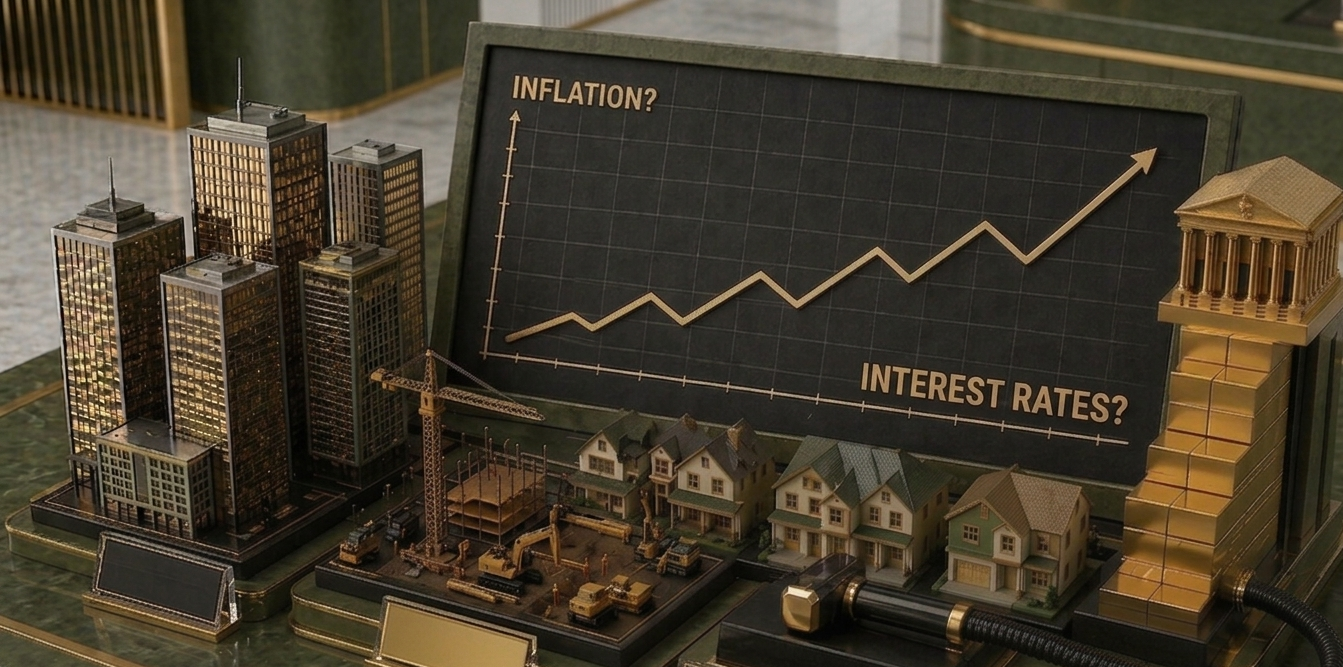
With the latest events in the Middle East and the latest geopolitical developments, not only our economic outlook but also the global economic outlook changed for the worse, sending markets into chaos. The International Monetary Fund, in its latest report, already downgraded its global economic growth by 0.2% to 3.1% and for SA by 0.4% to a low 1% economic growth now predicted for 2026. Whilst we already feel the consequences of the Middle East war in our pockets with rising fuel prices and fears for supply interruptions, as well as our rand coming under renewed downward pressure, the impact is expected to be prolonged over the next two years and maybe even longer. The full ripple and knock-on effect is still to be determined, whilst feeding through to broader inflation across all sectors of our fragile economy, whilst also limiting disposable income and people’s ability to invest in property.
At the moment, our economy is still holding out. In March, the PayInc Economic Index, which measures the value of electronic transactions processed through the PayInc Platform, showed an index 4.6% above a year ago, with increases noted at an average of 0.9% on a monthly basis. The rising costs of fuel, especially diesel that feeds directly into several critical parts of our economy and is embedded in the cost structures of key industries, will soon be very visible throughout our broader economy, especially in rising food, transport, and energy prices. The inflation rate is still around 3.5% but expected to rise above 4% for the remainder of this year, which will undermine government growth forecasts and fiscal plans, as well as expectations of an economic growth rate of 1.6% that the Finance Minister announced earlier this year.
Some of the latest interesting facts and statistics are as follows:
- FNB reports that the March house price index recorded growth of 0.2% month-on-month and 5.7% year-on-year, which was slightly less than the 5.8% recorded in February but overall, still positive as it beat inflation recorded at 3% in February and 3.1% in March.
- In spite of the Middle East conflict, we still expect general positive sentiment due to our more or less stable inflation rate and lower interest rates as seen over the past 12 to 18 months. Our residential market is expected to remain positive in price increases and sales volumes for this year, although still very moderate due to the long-term impact of the war and ripple effects throughout the world, and our economy, placing restrictions on affordability to invest in property, especially in the lower price ranges.
- The inflation rate for March has increased a mere 0.1%, and inflation data shows that the Housing and Utilities CPI were the biggest contributors to the overall CPI inflation of 3.1%. Inflation has always been the most powerful transmission channel of any energy crisis that will catch up as shortages and price increases of fuel, electricity, and fertilizers lead to higher production costs for businesses and industries. We are without doubt heading into a prolonged renewed period of inflationary pressure – how long, only time will tell.
- At this stage, leading economists predict that the inflation rate will increase to more than 4% next month and probably for the remainder of 2026, which inevitably will lead to a decision by the SA Reserve Bank to increase the interest rate, putting renewed pressure on our SA Property Market with limitations on disposable income, property investor interest, property sale volumes and price increases.
- SA’s economy is heavily reliant on consumer spending to drive GDP growth, and the impact of the Middle East conflict is already felt in our pockets with fuel price increases of almost 55% since the end of last year. It is inevitable that with declining affordability due to increasing basic monthly costs across a broad spectrum, our property market will also experience downward pressure with renewed limited growth in all sectors expected. Just looking at the USA, their CPI inflation increased from 2.4% year-on-year in February to the present 3.3%, whilst in the Eurozone it increased by 0.6%. The IMF also lowered its World Economic Outlook for 2026 by -0.3% to 3.4%.
- Building statistics for January 2026 showed a -3.2% real year-on-year decline in the value of building plans approved, which, on the other hand, will boost existing stock in the market due to the shortage of newly built units coming into the market, especially in the lower price ranges.
- Well-known economist, John Loos, reports that existing homes have recently outpaced newly sold homes in terms of price growth, the former growing year-on-year by 7.1% vs the latter’s by 1.3%. In terms of price hikes all around, especially in fuel and building material prices, together with rising inflation and interest rate hikes expected this year, new developments are under downward pressure, with several developers telling us that for the moment, they are shelving their developments until more clarity regarding the way forward can be established.
- One of the big factors to a gradual slowing down in residential sales, comes from recent SA Reserve Bank released data that pointed out that there is a steady decline in the value of new mortgage loans granted that declined from 18.2% granted during the 3rd quarter last year to 14.86% recorded in the following quarter and this trend with the latest global events, expected to continue for some time to come. Also, to note the slower pace of interest rate cuts and with no cuts instituted so far this year, it will also influence prospective buyers who might rather adopt a wait-and-see attitude.
- In its latest report, the International Monetary Fund downgraded its global economic growth rate by -0.2% to 3.1% and for SA by -0.4% to a mere 1% for this year. This course of events will limit sustainable, new job creation throughout our economy, further limiting people’s ability to invest in our property market.
We are facing renewed challenges across our macroeconomic environment, which has once again become very volatile once again with expected rising inflation, unemployment, and interest rates. Stagflation due to the Middle East war, volatility in both the oil markets and the worldwide economic landscape, is increasing global inflationary pressure. But on the other side, we should never forget that our property market compares favourably to most of the world. Just to illustrate, a 45m² one-bedroom apartment in Berlin costs around R3.5m, where the average home in Brooklyn, that is one of the most sought-after areas in Pretoria, can be bought for that price.
Although the lower property price ranges are going to be more exposed to the latest events, wealthier and foreign property investors will have more resilience to work through the latest headwinds. Improving fundamentals should uphold longer-term investments, and ongoing demand will continue to drive the property market whilst mitigating the anticipated ripple effect of the war. South Africans have always come through and adapted in spite of circumstances, and reinforcing property as worldwide acknowledged, as a merited and dependable investment.
Unfortunately, our complex SA Property Market does not operate in isolation, but through all its ups and downs, it has always remained resilient, and as such, especially as demonstrated during the Covid-19 period with its load shedding and economic turbulence, absorbing all the shocks like a true trooper. Once again, with the latest challenges and what might be following in the next year or two, our property market should remain to keep its value, although for this year, expected to show less capital growth and sale volumes than initially expected.
Always remember that your Heiberg Estates Team remains on 24/7 standby for you, whether you want to buy, rent, or sell! Please don’t hesitate to contact us please. It is always an honour to share our collective 50 years in the Real Estate Industry with you all!
WE ARE ALSO ALMOST SOLD OUT, SO PLEASE REFER YOUR FRIENDS OR FAMILY MEMBERS WHO WANT TO SELL TO US! AS WELL-EXPERIENCED AND PROFESSIONAL AGENTS, IT IS ALWAYS A PRIVILEGE TO ASSIST OUR MUCH-VALUED CLIENTS!
With best and warm regards.
Yours faithfully
Bambie & Heiberg Estate Team